


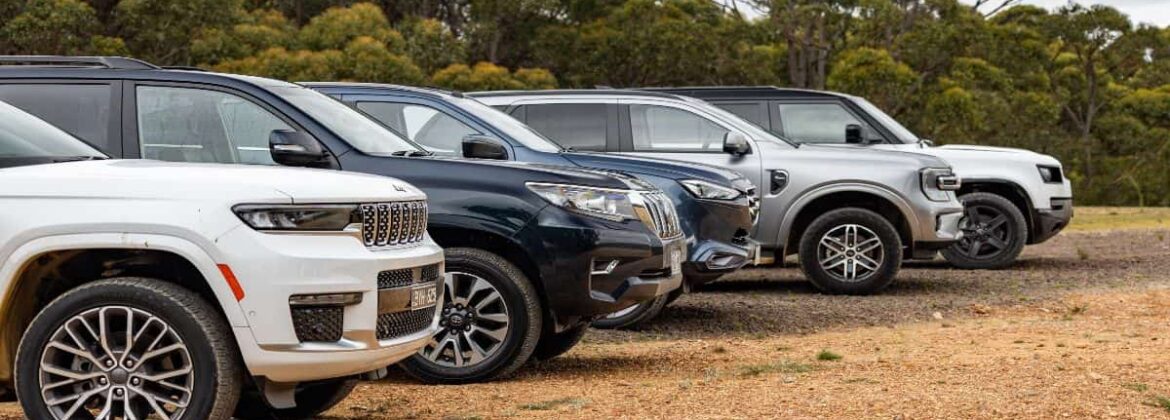
However, challenging weather conditions, or heavy towing, if you are in the market for a vehicle that can handle rugged terrains. Each of these vehicle types has its unique advantages and drawbacks. Understanding their crucial features will help you make an informed decision when purchasing your next vehicle.
What’s a 4WD (Four-Wheel Drive) Vehicle?
A 4WD vehicle, generally called a 4×4, is designed to distribute engine power evenly to all four wheels, providing better traction and control on rough terrains. These vehicles are ideal for outdoor adventures, making them perfect for driving through sand, riverbeds, dirt trails, and rocky paths.
Some of the most popular 4WD models include:
- Range Rover
- Jeep Grand Cherokee
- Toyota Hilux
- Ford Everest
- Nissan Patrol
Types of 4WD Vehicles
Full- Time 4WD
Always engaged in four-wheel drive mode, offering constant traction.
Part- Time 4WD
Allows the driver to switch between two-wheel and four-wheel drive depending on road conditions.
Pros of a 4WD Vehicle
Enhanced Safety & Control
Handles rough terrain and extreme weather conditions better than standard vehicles.
Superior Off-Road Performance
Increased traction and differential locks make 4WDs ideal for outdoor adventures.
High Towing Capacity
Most 4WDs can tow between 2,000 – 3,100 kg, making them great for hauling trailers, boats, and caravans.
Cons of a 4WD Vehicle
Higher Cost
4WD vehicles are more expensive due to their specialized features, with prices ranging from 30,000 to$ 70,000.
Further Maintenance & Repairs
Additional factors like differentials and transfer cases require regular servicing.
Lower Fuel Efficiency
Due to their heavier build and power-demanding systems, 4WDs consume more fuel than standard vehicles.
What’s an AWD (All- Wheel Drive) Vehicle?
An AWD vehicle also powers all four wheels, but unlike 4WD, it’s designed for better road traction rather than off-road capability. AWD systems are particularly useful for maintaining control on slippery roads, snow, and wet conditions.
How AWD Works
AWD vehicles use Torque Vectoring Technology, meaning power is automatically adjusted to different wheels based on traction requirements. This enhances speed and running while reducing the chances of wheel slippage.
AWD models are generally found in brands such as:
- Audi
- Subaru
Types of AWD Systems
Full-Time AWD
All four wheels are powered continuously.
Part- Time AWD
The system remains in two-wheel drive mode unless additional traction is needed.
Pros of an AWD Vehicle
Superior Traction in Slippery Conditions
Ideal for driving on rain-soaked roads, snow, or icy surfaces.
Improved Handling & Acceleration
Provides better control, particularly when turning corners on dry pavement.
Cons of an AWD Vehicle
False Sense of Security – AWD improves traction but doesn’t help with retardation. Drivers may overrate their control in dangerous conditions.
Higher Costs
AWD systems are more complex, leading to increased maintenance charges.
Less Fuel-Efficient
The continuous power distribution to all wheels increases energy consumption.
What’s an SUV (Sports Utility Vehicle)?
An SUV is a broad category of vehicles, some of which include 4WD or AWD. While SUVs are designed for versatility, they don’t always have the same level of out-road performance as dedicated 4WD vehicles.
Popular SUV Models:
- Chevrolet Suburban
- Mazda CX- 5
- Honda CR- V
- Hyundai Tucson
- Kia Sorrento
- Jeep Wrangler
- Ford Escape
Pros of an SUV
Spacious & Comfortable
Can accommodate up to 7- 8 passengers with ample cargo space.
Great Road Grip & Handling
Numerous SUVs come with AWD or 4WD for better stability.
Versatile
Suitable for city driving and light off-roading.
Cons of an SUV
Higher Purchase & Maintenance Costs
Due to their larger size and advanced features.
Delicate to Maneuver in Tight Spaces
Large SUVs may be cumbersome for city driving.
Higher Carbon Emissions
Consumes further energy, making it less eco-friendly.
Which Vehicle is Right for You?
However, go for a 4WD, if you need maximum off-road capability.
Still, choose an AWD, if you want better road traction for slippery conditions.
However, an SUV is a solid choice, if you prefer a versatile vehicle for city and occasional adventure passages.
Ready to Find Your Perfect Ride?
Choosing between 4WD, AWD, and SUVs depends on your driving needs. Whether you are heading off-road, diving tough weather, or just looking for a reliable family vehicle, make sure to weigh the pros and cons.
Looking for financing options? Whitealpaca Finance can help you get the best auto loan rates for your next vehicle. Contact us today to get started.
Frequently Asked Questions
Is a 4WD or AWD better for off- road driving?
A 4WD is better for extreme off-road conditions due to its locking differentials and enhanced traction.
Are AWD vehicles fuel-efficient?
No, AWD vehicles consume further energy because they send power to all four wheels.
Can an SUV handle off-road driving?
Some SUVs with 4WD can, but they may not be as able as dedicated 4WD vehicles.
Are 4WD vehicles more expensive than AWD?
Yes, 4WD vehicles frequently cost further due to their advanced off-road systems and durability.
Do I need a 4WD or AWD for city driving?
Not inescapably. AWD is useful for slippery roads, but most city drivers do fine with two-wheel drive.
Leave A Comment